Polyurethane foam, often abbreviated as PUR, can be used as an insulating material in applications where low weight, moldability, and the ability to customize thickness are important. However, PUR is not a single type of foam. Depending on its composition, the material can be soft and compressible or significantly stiffer, which affects both its insulating properties and how it performs after installation.
At Cabseal, we work with several types of foam plastic that can be processed into insulating components. We help you select the right foam based on the design’s requirements for thickness, density, compression, and temperature, among other factors.
Right from the startThe foam's cellular structure affects its function
In foam plastic, a large portion of the material’s volume consists of air or gas trapped within the cellular structure. This is a key reason why the material can provide insulating properties without making the component heavy.
However, the cell structure also affects other properties. An open-cell foam allows air to pass through and compresses easily, while a more closed-cell system restricts air and moisture transport in a different way. Therefore, the foam’s structure must be suited to the actual function of the insulation component.
Density and compression are important factors in the assembly process
Two foams of the same thickness do not necessarily behave the same way. Density and hardness affect, among other things, how easily the material compresses and how much support it provides when installed between other components.
If the foam is to fill a gap, the component must, for example, be able to accommodate variations without being compressed to the point where its function is altered. If, on the other hand, it is to retain a specific shape, a firmer foam may be more suitable. The choice of material must therefore be made in consideration of the component’s dimensions and the compression it will be subjected to in the finished assembly.
More Than Just Foam Insulation
Foam plastic is also used for purposes other than insulation. Among our foam plastic products, you’ll find solutions for filtration, sound absorption, and shock absorption, for example.
If the design primarily requires limiting heat transfer, you can also read more about our thermal insulation.
Materials we use to manufacture
The Right Materials for the Right NeedsCut-to-size parts based on the structure's dimensions
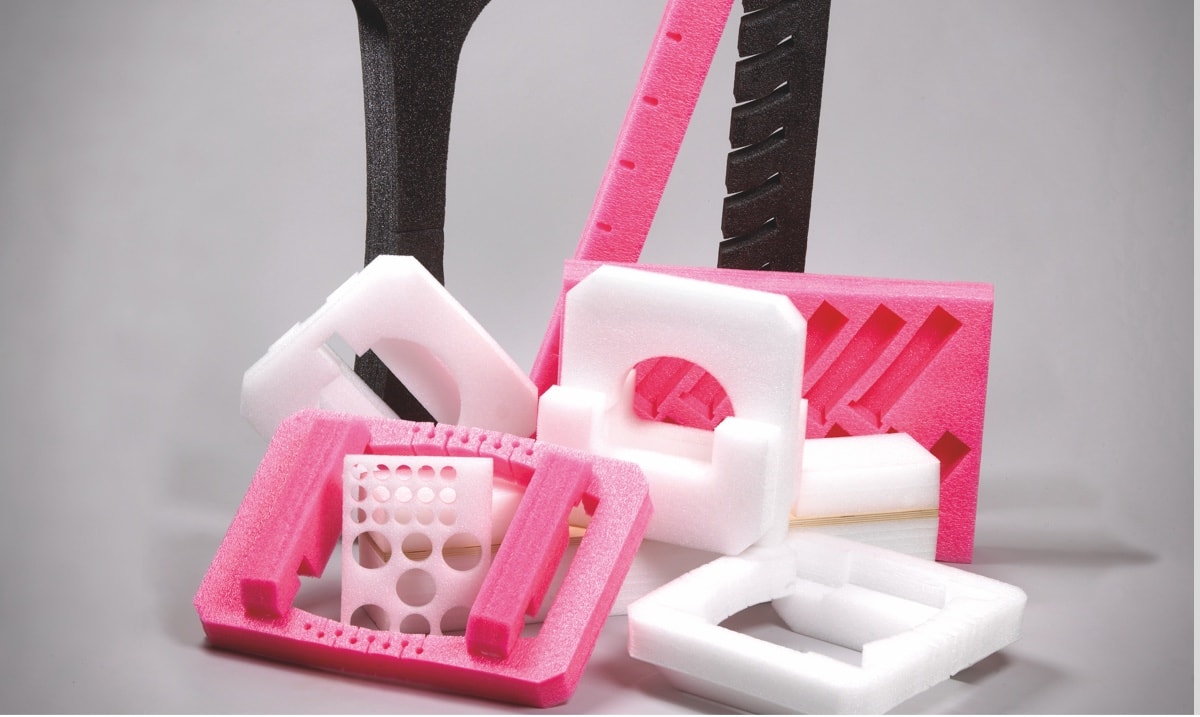
Foam plastic can be machined into parts with custom outer contours, thicknesses, holes, and recesses. This allows the insulation to conform to the component’s geometry and be delivered ready for installation at the intended location.
Do you need an insulation component made of PUR or another type of foam plastic? Contact us at Cabseal, and we'll help you choose the right foam and customize the component to fit your design!