
When sound from a machine or other equipment hits hard surfaces, it can be reflected multiple times inside, for example, an enclosure. The result can be a higher sound level than if the sound energy had been absorbed closer to the source. Sound absorbers and acoustic foam are used primarily to reduce high-frequency sounds. These materials absorb the sound and convert part of the sound energy within their porous structure.
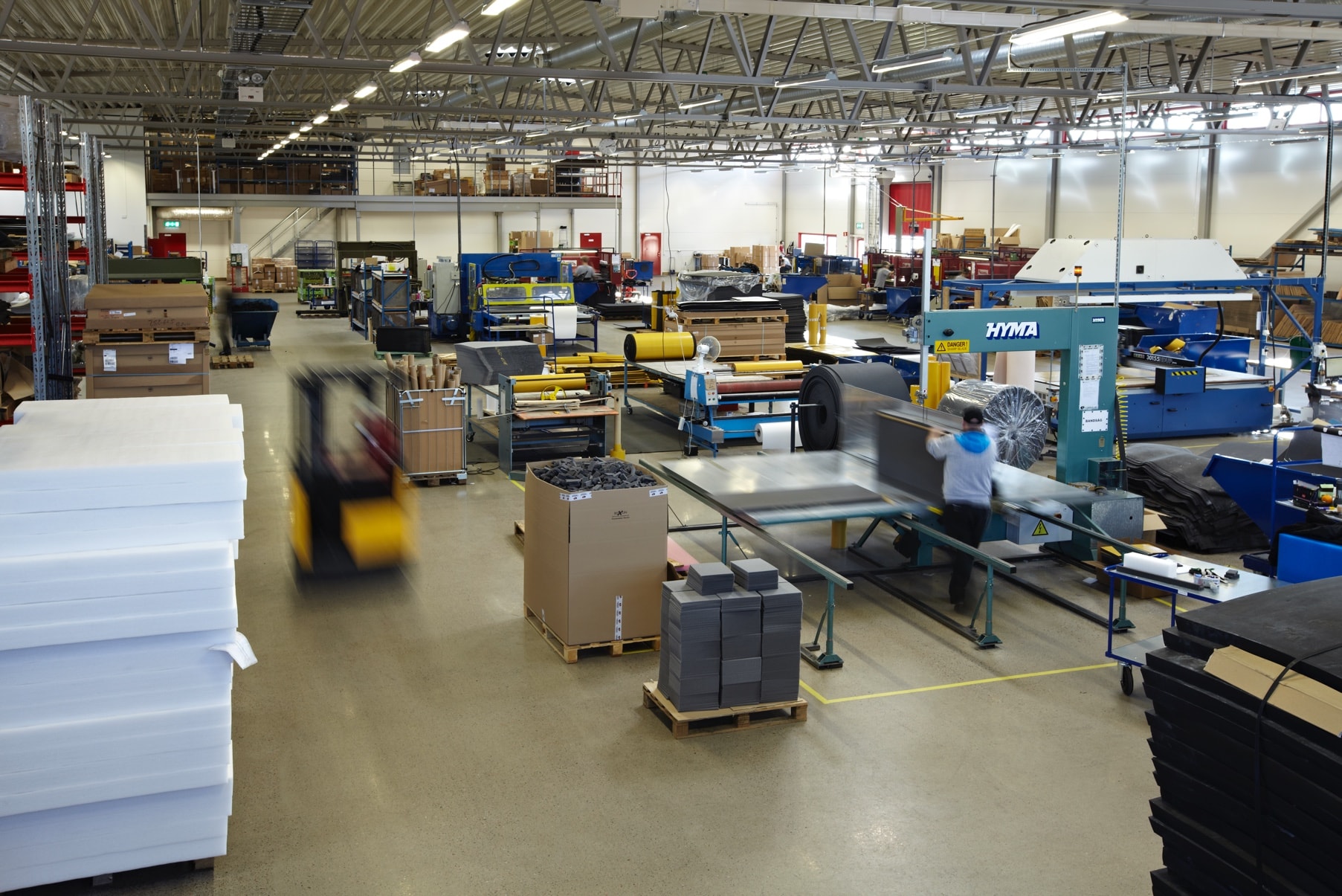
At Cabseal, we manufacture sound-absorbing components made of polyether foam, polyester foam, and bonded foam. Bitumen can be used when the structure also requires damping of vibrating surfaces. The materials can be customized to suit the surface where the absorber will be installed.
Choose Right from the StartThe pores do the work in acoustic foam
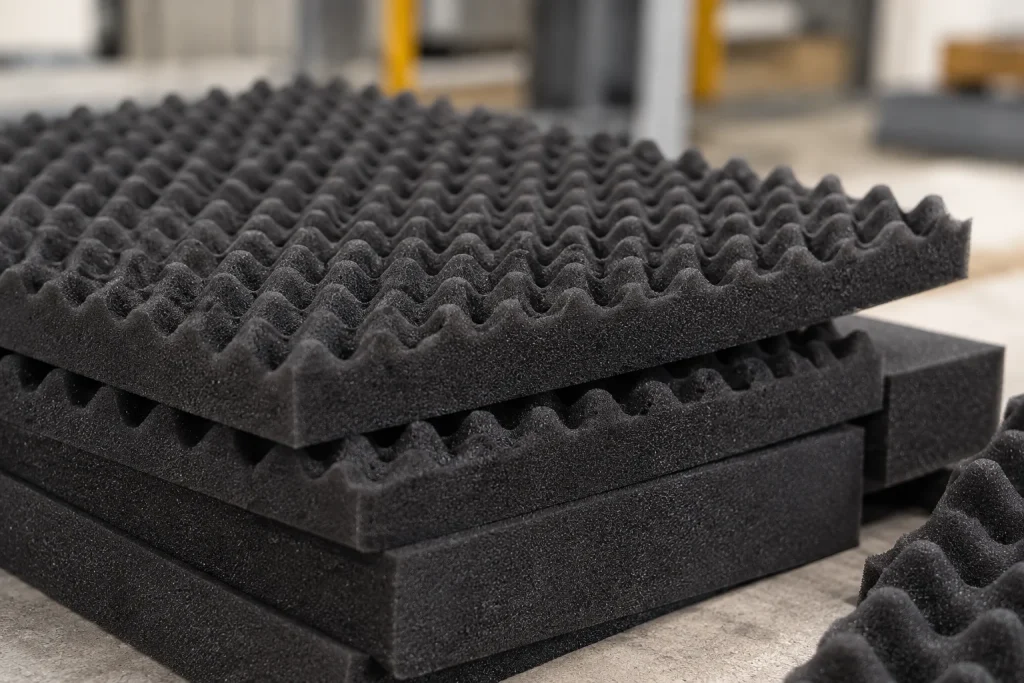
In a porous foam material, sound waves can penetrate the material’s open structure. When the air is set in motion through the small passages, friction occurs and some of the sound energy is converted into heat. Less sound energy is then returned to the room or enclosure as reflected sound.
This also means that an absorber must have a structure that sound can actually penetrate. A material can be soft and foamy without necessarily having the same sound-absorbing properties as acoustic foam designed for that purpose.
Materials We Manufacture: Sound Absorbers and Acoustic Foam in
Various thicknessesThickness affects which frequencies are absorbed
Sound absorption is frequency-dependent. Thinner absorbers are generally more effective at higher frequencies, while lower frequencies have longer wavelengths and often require greater material thickness or a different design to be effectively attenuated.
Therefore, it is not always best to choose acoustic foam based solely on which material will fit. The type of sound that dominates is also relevant. A high-frequency fan noise and a low-frequency machine noise may require different solutions even though the sound level in decibels is similar.
Absorption and vibration damping solve different problems
Polyether and polyester foam are used to absorb airborne sound, while bitumen serves a different purpose. When a thin sheet of metal is set into vibration, it can begin to radiate sound on its own. A bitumen-based damping material adds mass and damping to the surface and can reduce its tendency to vibrate.
It is therefore important to determine whether the noise comes primarily from sounds reflected within the structure or from vibrating surfaces. If you are experiencing problems with vibrations transmitted through the structure, you can read more about our vibration damping and structure-borne noise damping solutions.
Place the absorbent where it will be most effective
In a machine enclosure, not every surface needs to be automatically covered with the same amount of acoustic foam. The placement can be adjusted based on where the sound originates, which surfaces cause strong reflections, and how much space is available without, for example, affecting ventilation or service access.
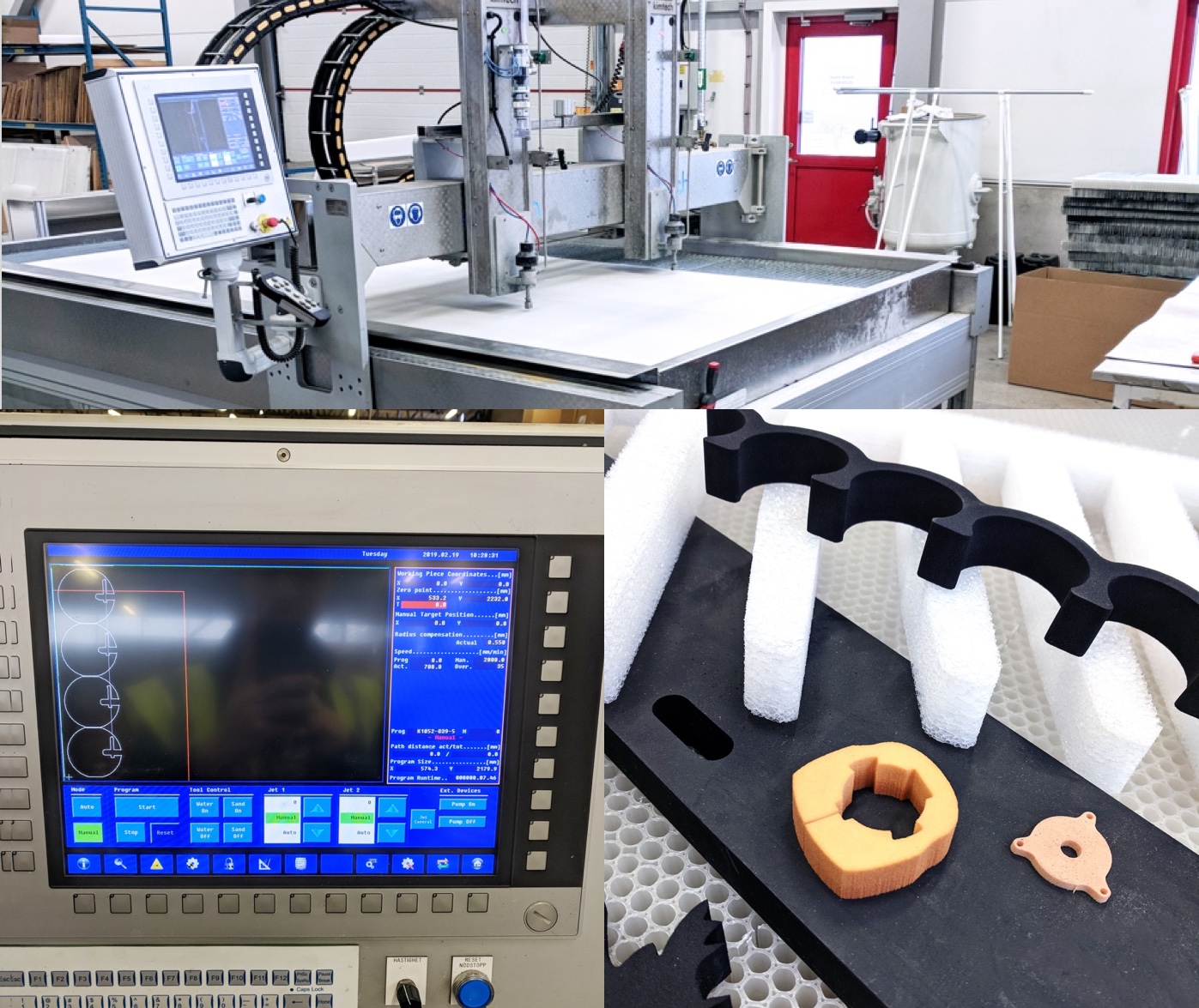
At Cabseal, we can cut sound absorbers to match the geometry of your enclosure or component, with customized outer contours and cutouts. Please let us know what noise problem you’re trying to solve and what the design looks like, and we can work together to determine a suitable solution. Contact us today!